
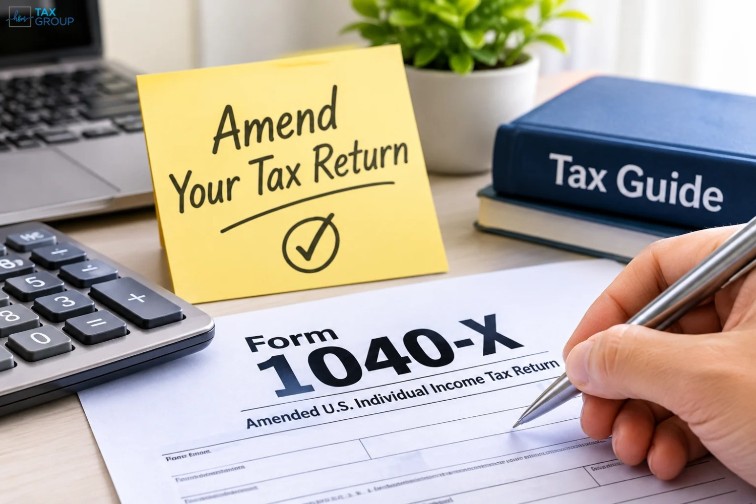
Made an error in your taxes? Do not worry. You can fix this by completing an IRS Form 1040-X amended tax return. It’s not as uncommon as you may think! Or perhaps you discovered something since you filed. It’s not unusual for tax returns to have some minor mistakes. Fortunately, the IRS provides a straightforward amended tax filing process for fixing it. It’s here every season as tax professionals. Here’s what Form 1040-X is, when to use it, what you can change, how to complete it and what records to collect first if you’re filing one. Let’s get started!
What is Form 1040-X and for what purpose do taxpayers use it?
The IRS asks for Form 1040-X to amend an already filed individual tax return with the IRS. It is used by taxpayers to correct mistakes which alter their tax, refund or balance due. It illustrates change and its cause. This is an official correction note. A single Form 1040-X is required for each year in question.
Correcting a Previously Filed Return
Form 1040-X will not cancel the prior tax return. The IRS maintains both and makes a comparison. Avoid submitting a new Form 1040 for the same tax year as it can cause additional confusion and delays. Also, you typically don’t need to amend basic math mistakes, because the IRS will typically correct these math mistakes for you and will send you a notice.
When should you file for an amended tax return?
Think about changing at any time when you know that something important about your return is wrong or missing. Waiting can cost you money; interest will continue to accrue on any additional taxes that you have. If you are owed money, however, there is a time limit to do so. To avoid delays, generally file Form 1040-X only after you have filed your original return.
Common Tax Filing Changes
- Late or fixed W-2 or 1099: Received after the filing deadline.
- Changing the law: A new tax law is applicable to a previous year.
- Disaster losses: You report a loss to the federal disaster on last year’s return.
- Found receipts: You discover receipts for deductible costs that you did not record.
Which tax information can be changed using Form 1040-X?
Form 1040-X can alter most figures on your 1040 form. You can update income, tax return adjustments, deductions, credits, payments and taxes owing. In many cases, you can do this as well – add or remove dependents, and change filing status. But there are restrictions to some options. In general, spouses cannot change from a joint return to separate returns after the filing deadline has passed, although specific exceptions may apply.
What is the current total income, and what are the total credits and filing status?
- Income: Fill in missing wages, freelance income, unemployment or investment income.
- Take a missed Child Tax Credit, Earned Income Tax Credit or education credit.
- Deductions: Alternate between standard deduction and itemizing.
- Filing status: If you meet the criteria, you may be able to change from single to head of household.
- Joint filing: Spouses who filed separately can often switch to filing jointly.
- Fixed choices: Some tax elections cannot be changed after filing.
How to complete the Form 1040-X correctly?
Fill out the IRS.gov Form 1040-X instructions first. Type the tax year on the top of the form, followed by your name, Social Security number and address. Now review each line that was changed, following your original return. Last, write simply the reason for the amendment, then sign and date the form and include any forms/schedules that were amended.
Understanding the Form’s Three Columns
The amounts in column A are from your original return, or from amounts adjusted by the IRS last year. The increase or decrease of each line is indicated in column B. Column C will be the correct amount, which is Column A + or – Column B. Can you e-file Form 1040-X? Yes. You can generally e-file Form 1040-X using participating tax software for the current tax year and two prior tax periods. Earlier tax years generally must be amended by paper. If the original return for a prior year was filed on paper, the amended return may also need to be filed on paper.
What documents do you need to collect before you can modify a return?
Before you begin, gather a copy of your original return and all related documents relating to the change. This includes anything that documents the new numbers. Keep copies in one safe file folder. If you have it all prepared, you’ll get the right numbers the first time. It also provides you with documentation in case the IRS in the future questions your amended return.
Essential Tax Records
- Income documents: W-2s, 1099s and any corrected ones.
- Deduction proof: Receipts, Form 1098, donation letters
- Submit proof of credit (1098-T, child care bills or dependent records).
- IRS letters: Letters pertaining to that tax year.
- Payment records – Estimated tax payments.
- Business books: Profit and loss statement for self-employed income.
- Have professional assistance: H&M Tax Group can review your records and help you prepare and file an amended return.

Conclusion
Not filing a tax return is not a sign of failure. That’s a good, mature and responsible action. Compile your records, go through the instructions and submit your amendment before the due date. The IRS has a tool called “Where’s My Amended Return?” that can be used to check on the status of your amended return approximately three weeks after the return was submitted. H&M Tax Group is a local Tax advisory group which assists clients in completing returns correctly and in planning their taxes. H&M Tax Group also provides tax filing, bookkeeping, and QuickBooks services for individuals and businesses that need ongoing tax and accounting support. Give H&M Tax Group a call today and let’s get your next return right from the start.