
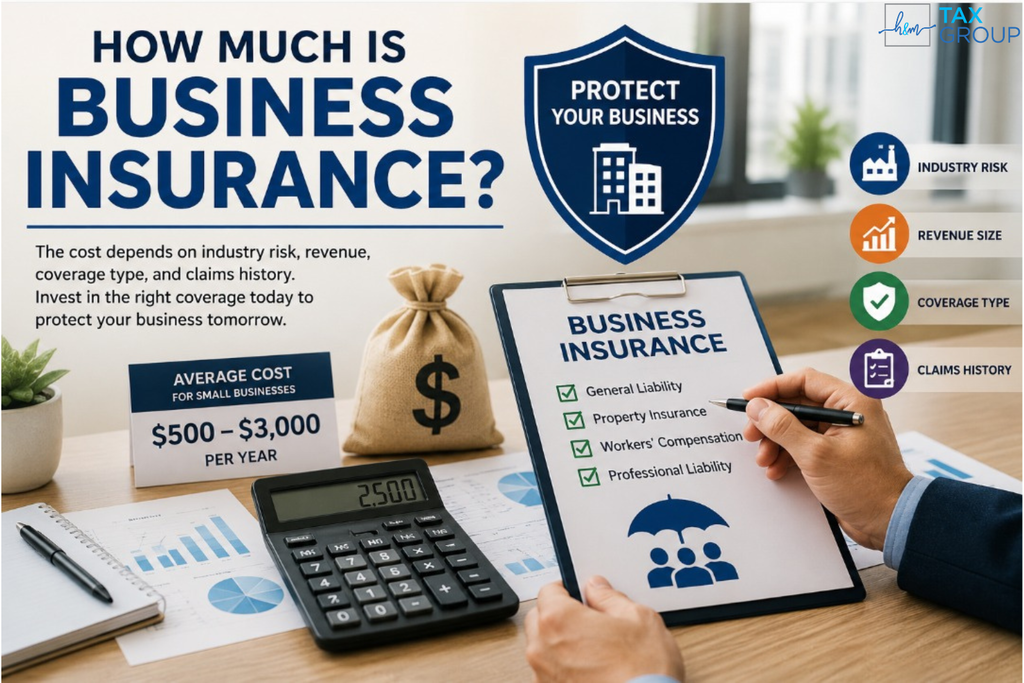
The insurance costs for businesses differ significantly depending on the type of business, revenue, type of coverage, and claims history and knowing the factors that influence business insurance costs can help business owners decide on coverage and ensure their insurance costs are managed appropriately within the overall financial plan. If you’re a small, growing business, one of the most important things you need to understand about insurance is the fact that it’s a critical cost that can impact your company’s bottom line and your tax situation each year.
What is the Cost of Business Insurance for Small and Growing Businesses?
The price of small business insurance differs considerably, depending on the size and kind of business. The most basic small business insurance policy is general liability insurance, which ranges from $400 to $1,500 a year for businesses with low risk. The higher-risk industries or businesses with higher revenues would be able to pay a lot more. The cost of a basic general liability insurance policy for most small businesses ranges from $500 to $3,000 per year and the total price of coverage increases when other types of policies are purchased.
To be aware of the Average Premium Range.
The general liability insurance cost for a small retail/service business is typically in the lower end of the premium spectrum. Businesses that have higher risk exposure, such as construction, manufacturing or healthcare-related industries, usually have higher premiums. Most businesses looking at coverage and budget options will start with a business owner’s policy, which combines general liability with commercial property insurance, and is likely to be a more cost-effective option than buying the policies individually.
What impact can industry risk have on business insurance premiums?
How much is liability insurance for a business? It is one of the single most influential factors in industry risk. The likelihood of a claim is determined based on the type of services a business provides (and that’s the first factor determining premium rate).
Why do some businesses pay more than others?
Construction, roofing, and manufacturing are a few high-risk industries that have a higher chance of property damage, bodily injury claims, and equipment losses, all of which mean higher general liability insurance cost than an office-based and/or consulting firm.
Professional service companies, such as accounting firms, consultants, and marketing companies, generally have lower general liability insurance premiums, but may need an errors and omissions professional liability insurance policy.
Claims history is a record kept over a business’ renewals. Even if a business is in the same industry, it will have to pay higher premiums for small business insurance if it has liability claims than a business that does not have any liability claims.
What Role Does Business Revenue Play in Determining Insurance Costs?
Revenue is a direct input in some of the formulas used for calculating insurance premiums and it makes sense. A company with more revenues will usually be bigger, have more clients and be more exposed to the risk of operating a business than a smaller company in the same sector.
Premiums can vary depending on company size. Premiums can vary with company size.
Revenue is a proxy for exposure used by insurers. In general, a business with an annual revenue of $500,000 will not have to spend as much money as a business with an annual revenue of $5 million. Limits should be considered and adjusted as revenue increases. This is where insurance planning in conjunction with income planning becomes relevant: By keeping insurance costs in mind as they increase in line with income growth, business owners can make prudent budget decisions and get the right costs deducted in their income tax with H&M Tax Group.
What effect do various types of business insurance have on the cost of insurance?
Small business insurance policies are not all priced in the same manner and the number of policies a company has will determine the total amount of insurance that the company will pay in one year.
Comparing General Liability, Property and Specialized Policies
- General liability insurance covers third-party bodily injury and property damage claims. The standard cost of general liability insurance is the first cost for most businesses and is mandated by clients, landlords or licensing authorities prior to the start of work.
- Commercial property insurance will protect their business’s physical property, including equipment and inventory, and even the physical structure itself, from damage or loss. There are several factors that affect the commercial property insurance premium, such as the type of construction of the building, the location of the business as well as the value of the assets which would be covered by the insurance policy.
- Some policies are specialized like commercial property, workers’ compensation, and professional liability, which can cost more than GL, but are required for certain types of businesses, depending on the operational exposures.
As a real and ongoing business expense, insurance costs can be a very real part of your business expenses and when documented properly, many of your business insurance costs can be tax-deductible. Whether business owners are tracking insurance use for the whole year or just trying to avoid any missing insurance write-offs during income tax filing, H&M Tax Group’s bookkeeping and QuickBooks services ensure that business owners can monitor insurance expenses and put it to good use all year round.

Conclusion
Business insurance is a cost you have to cover that helps to safeguard your company against financial risks and unforeseen losses. The cost depends on multiple factors including industry, revenue, type of coverage, and claims history. Familiarizing yourself with what affects premiums can help you make an informed decision about coverage and plan appropriately. It is also crucial to keep track of insurance costs for financial planning and tax reasons. H&M Tax Group assists businesses to keep proper records, to have an understanding of what insurance costs can be deducted and to ensure that such costs are recorded correctly when preparing their taxes.